
Drop a dumpster in your driveway and you’re usually fine. Put it at the curb or in the street, and suddenly you might need a permit from your town. That’s where most homeowners and contractors get tripped up, because dumpster permit requirements change block by block across Cape Cod and Plymouth, and nobody hands you a rulebook when you book a rental.
Here’s the short answer: permit needs almost always come down to placement on public property versus private property. A dumpster sitting entirely on your own lot rarely needs town approval. One that touches a street, sidewalk, or right of way usually does, and skipping that step can mean fines or a forced move mid-project.
This article breaks down exactly when you need a permit, how local regulations differ from one Cape Cod town to the next, and the steps to get approved without holding up your delivery. We’ll also cover what happens if you place a dumpster without one, so you can plan your project with zero surprises.
Why dumpster permit requirements matter
Towns care about dumpster placement because a container sitk sitting in the street changes how people drive, walk, and access their property. Local regulations exist to keep sidewalks clear for pedestrians, preserve sightlines at intersections, and make sure fire trucks and plows can still get through. Skip the permit process and you’re not just risking a fine, you’re potentially blocking access for your neighbors or emergency responders, which is exactly what these rules are designed to prevent.
Public right-of-way vs. private property
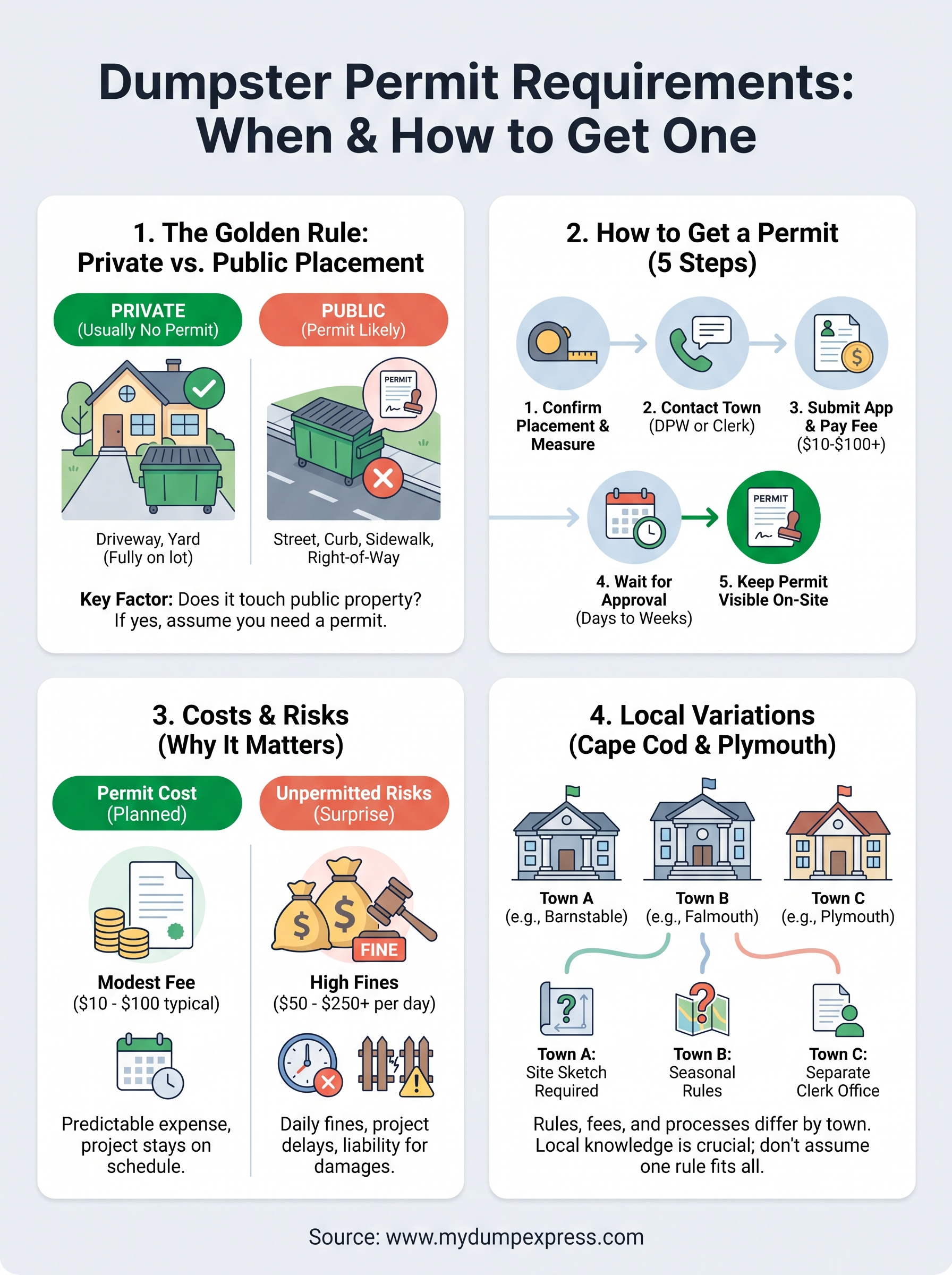
Placement is the single factor that determines whether you need a permit at all. A dumpster parked on your driveway, in your yard, or anywhere fully inside your property line typically needs zero paperwork. The moment any part of that container touches a public street, sidewalk, or right-of-way, most Cape Cod and Plymouth towns require a street occupancy permit before delivery, not after.
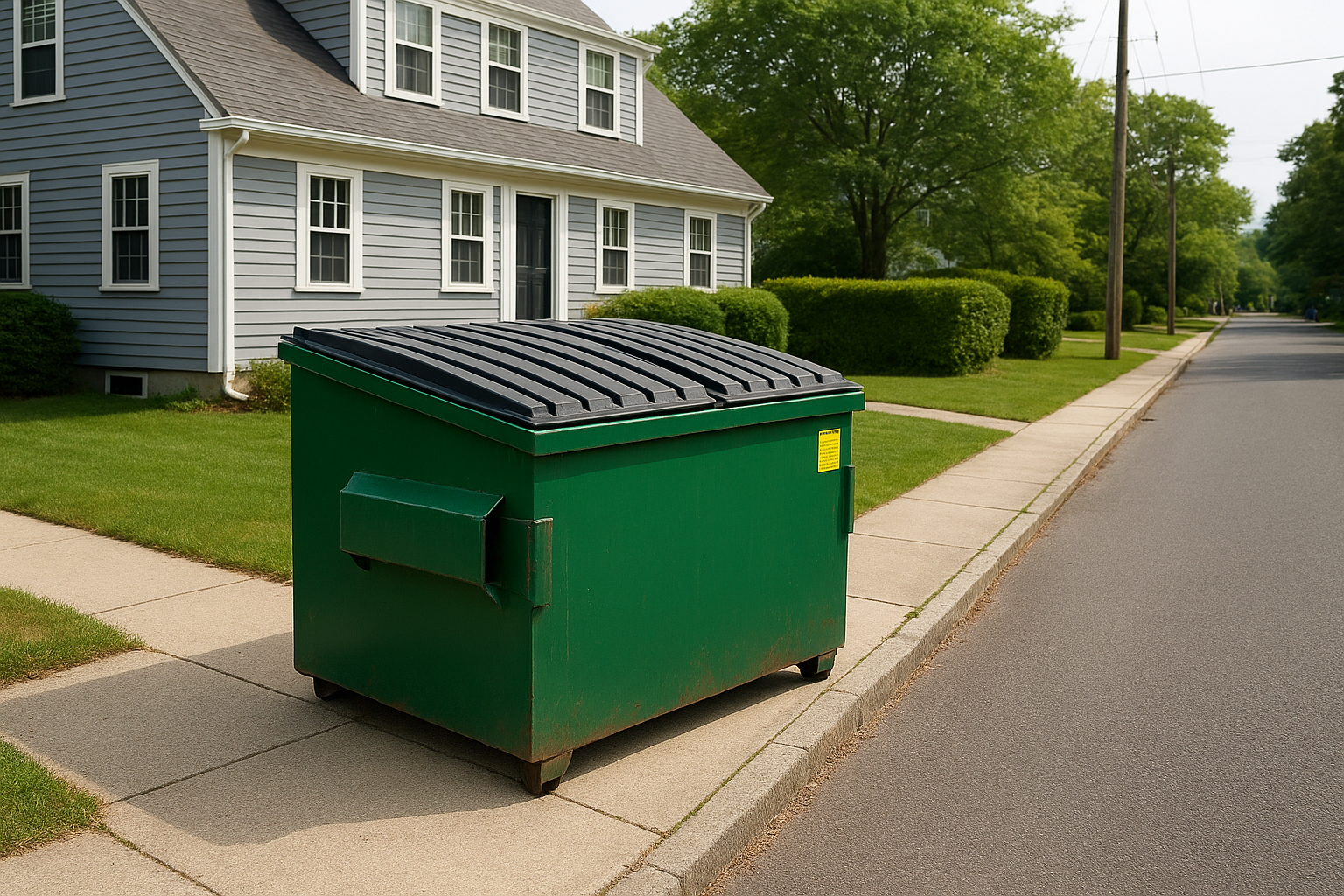
If the dumpster touches public property, assume you need a permit until your town tells you otherwise.
| Placement | Permit typically required? |
|---|---|
| Driveway (fully on private lot) | No |
| Backyard or side yard | No |
| Curb or street edge | Yes |
| Sidewalk | Yes |
| Shared private road with no clear ownership | Check with town, often yes |
Liability and safety risks
Liability shifts the moment a dumpster sits somewhere other than your own lot. If a delivery truck damages town infrastructure, or a car strikes an unpermitted dumpster at night, you or your contractor could be on the hook for damages that a permit process would have flagged in advance, like requiring reflective markings or barricades. Insurance carriers also look at whether proper permits were pulled when they process claims tied to a rental project, so this isn’t just a bureaucratic hurdle, it’s financial protection.
What skipping a permit costs you
Unpermitted placement rarely ends quietly. Code enforcement officers patrol these towns specifically looking for containers in the right-of-way, and many issue same-day citations rather than warnings. Beyond the fine itself, you can lose days waiting for a retroactive permit approval, which stalls a renovation or cleanout you scheduled around a tight timeline. That delay costs more than the permit fee ever would, which is why checking placement rules before your dumpster ever arrives saves both money and momentum on your project.
How to get a dumpster permit for your project
Getting a permit sounds like paperwork nobody wants to touch, but the process is usually faster than people expect once you know where to look. Most Cape Cod and Plymouth towns handle street occupancy permits through the DPW or the town clerk’s office, and many now accept applications online, which cuts a trip to town hall out of your schedule entirely.
Steps to apply
Start the process as soon as you know your dumpster placement will touch public property, not the day before delivery. Here’s the general sequence that works across most towns in the region:
- Confirm placement first. Decide exactly where the dumpster will sit and measure the distance from the property line.
- Contact your town’s DPW or clerk’s office to ask which permit applies and what form they require.
- Submit the application with your address, rental dates, and dumpster dimensions.
- Pay any associated fee, which most towns collect at submission.
- Wait for approval before your delivery date, and keep a copy of the approved permit on site.
What information you’ll need
Applications typically ask for the same core details no matter which town you’re in, so gather them before you start:
- Property address and parcel number
- Rental start and end dates
- Dumpster size (5, 10, 15, or 20 yard)
- Exact placement location, including distance from curb or crosswalk
- Contact information for the property owner or contractor
A permit application takes minutes to fill out, but skipping it can cost you days.
A reliable dumpster rental company should be able to tell you upfront whether your specific placement needs a permit, and often points you toward the right town department so you’re not guessing. That guidance alone can shave a week off your project timeline compared to figuring it out after your dumpster is already sitting at the curb.
Costs, timelines, and fines to expect
Budgeting for a dumpster permit means more than the rental fee itself. Most Cape Cod and Plymouth towns charge a modest fee for a street occupancy permit, but the real cost shows up when you skip the process and get caught, so it pays to plan for both the paperwork and the timeline before you book delivery.
What permits typically cost
Fees vary by town, but they rarely break the budget on their own. Expect a range like this across the region:
| Town size | Typical permit fee | Processing time |
|---|---|---|
| Small town, simple form | $10 to $25 | Same day to 2 business days |
| Mid-size town, online portal | $25 to $50 | 2 to 5 business days |
| Larger municipality, multiple departments | $50 to $100 | 5 to 10 business days |
How long approval actually takes
Timelines depend on how busy the DPW or clerk’s office is that week, not just the size of the town. Requesting your permit at least five business days before delivery gives you a buffer if the office needs additional details or a site check. Waiting until the day before delivery is the most common reason homeowners end up with a dumpster sitting curbside without approval.
The real cost of skipping it
Fines for unpermitted placement often land between $50 and $250 per violation, and some towns treat every day the dumpster stays as a separate offense. That adds up fast on a two-week rental.
A missed permit rarely costs one fine, it costs one fine per day until you fix it.
Contractors juggling multiple job sites feel this the most, since one overlooked permit can stall an entire crew’s schedule while paperwork catches up.
Dumpster permit rules across Cape Cod and Plymouth towns
Every town on Cape Cod runs its own version of a street occupancy permit, and the differences trip up plenty of homeowners who assume one set of rules covers the whole region. Barnstable, Falmouth, Yarmouth, and Bourne each have separate DPW procedures, separate fees, and separate ideas about how far a dumpster can sit from a crosswalk or fire hydrant. Plymouth adds another layer since it sits outside Barnstable County entirely, with its own clerk’s office handling applications on a different timeline than its Cape Cod neighbors.
Town-by-town differences worth knowing
Some towns lean strict, others barely blink at a dumpster near the curb for a short rental. Here’s what tends to separate them:
| Town | Permit authority | Notable quirk |
|---|---|---|
| Barnstable | DPW | Requires site sketch for street placement |
| Falmouth | DPW | Faster turnaround in off-season months |
| Yarmouth | Town clerk | Flat fee regardless of dumpster size |
| Bourne | DPW | Extra scrutiny near school zones |
| Plymouth | Town clerk | Separate application from Cape Cod towns |
No two towns handle dumpster permits the same way, so never assume last year’s rule still applies this year.
Why local knowledge saves you time
Contractors working across multiple towns in a single week feel these gaps the most, since a placement that’s routine in Falmouth might need extra paperwork in Bourne. Rules also shift with seasonal traffic patterns, since summer tourist volume pushes some towns to tighten curbside restrictions between Memorial Day and Labor Day. Homeowners rarely deal with this complexity more than once, but a company that delivers dumpsters across all 40-plus towns in the region tracks these differences daily, which is exactly the kind of local expertise that keeps a project moving instead of stalled at the permit desk.
Getting your dumpster placement right from the start
Most of what trips people up with dumpster permit requirements boils down to one question: does the container touch public property? Answer that honestly before delivery day, and you avoid fines, delays, and awkward calls with code enforcement. Every town on Cape Cod and in Plymouth runs its own process, its own fees, and its own quirks, so what worked for your neighbor’s driveway job last summer might not apply to your street-side placement this fall.
You don’t have to sort this out alone. A team that delivers dumpsters across 40-plus towns in the region already knows which permits apply where, and can steer your placement toward the option that skips the paperwork entirely when possible. That’s local expertise you can lean on instead of guessing. If you’re ready to book a rental and want straight answers about permits, sizing, and scheduling, get a quote from Dump Express and start your project without the guesswork.